AI can transform your business. Most attempts make a mess. We build the plan.
Margin Shift helps service businesses see where work breaks across lead handoff, onboarding, delivery, communication, and billing, then ship a practical delivery plan your team can execute.
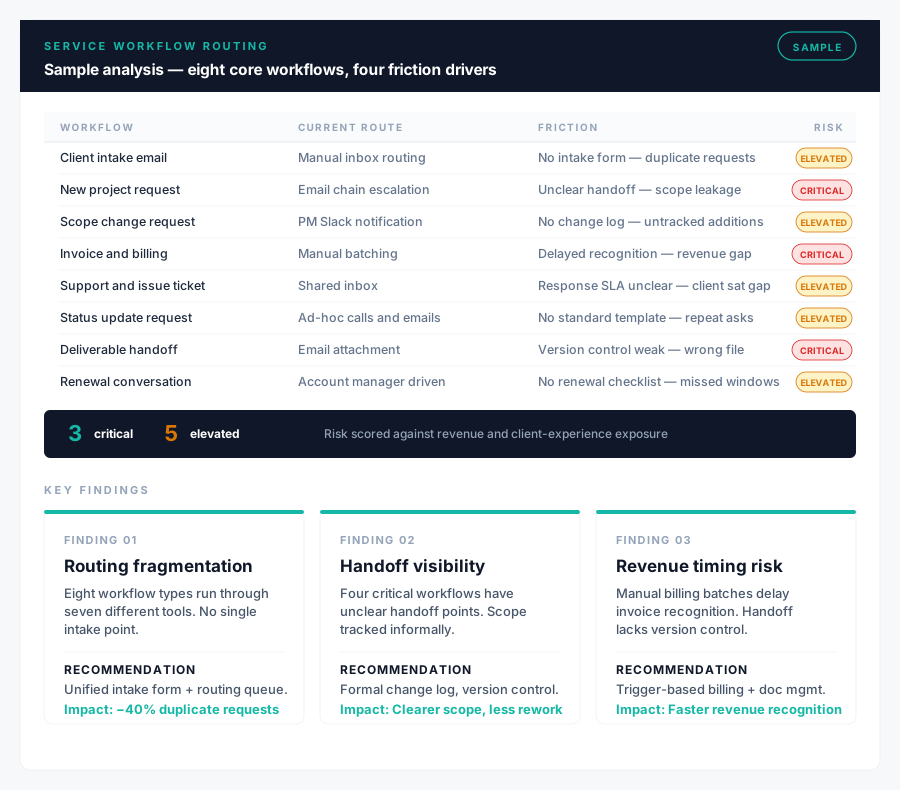
Is this the right fit?
The audit is built for businesses with repeatable service delivery and defined workflow patterns.
Good fit
- ✓ Agencies
- ✓ Consulting firms
- ✓ MSPs
- ✓ Other recurring-service businesses
- ✓ Teams with repeatable client work and defined roles
Not the right fit
- ✕ One-time project shops
- ✕ Tool recommendation shoppers
- ✕ Teams without recurring workflow issues
- ✕ Businesses unwilling to change process
Not sure if this is the right fit? Request a Leverage Audit and we will discuss scope and fit before any commitment.
Where service businesses usually lose time and visibility
Four operational areas where friction compounds across your workflows.
Lead handoff
Sales hands off to delivery on email. Context is scattered. Delivery re-asks questions clients already answered. Kickoff starts late.
The audit captures where context is lost between sales and delivery, which fields are missing, and how it delays kickoff.
Kickoff and onboarding
Onboarding varies by person. Scope details live scattered across email and notes. Changes go unrecorded until invoicing reveals creep.
The audit documents which onboarding steps vary by person, where scope details are unrecorded, and how creep compounds.
Delivery visibility
No shared view of progress. Team members use different tools. Blockers only surface when escalated. Client updates are reactive.
The audit maps where progress data lives, which blockers go unreported, and how visibility gaps affect client communication.
Billing lag
Invoices go out weeks after delivery ends. Collections run on memory. Renewal decisions depend on scattered notes. Upsells are missed.
The audit shows when invoices should trigger, which milestones are disconnected from billing, and where renewal decisions fall through.
What a Leverage Audit might surface
A representative scenario showing the kind of findings, possible actions, and outcome measures the audit produces. This is illustrative; every engagement surfaces different findings.
Situation
A midsize consulting firm runs recurring engagements for retainer clients. Lead handoffs happen over email. Project scope changes go untracked. Project status lives in spreadsheets updated weekly. Invoicing lags delivery by weeks.
What the audit surfaces
Client handoff has no standard template: delivery teams re-ask questions. Scope changes are verbal, never documented. Project status is only visible at weekly syncs. Invoice triggers are disconnected from project milestones.
What the plan might recommend
Standardize handoff with required context fields. Introduce a scope-change log with lightweight approval. Replace weekly spreadsheet status with a shared view. Tie invoice triggers to delivery milestones.
KPIs to monitor
Handoff completion time, scope change documentation rate, project status visibility lag, and days-to-invoice after milestone completion.
What you receive
Four standalone deliverables. Fixed fee. Fully portable - no follow-up engagement required to get value.
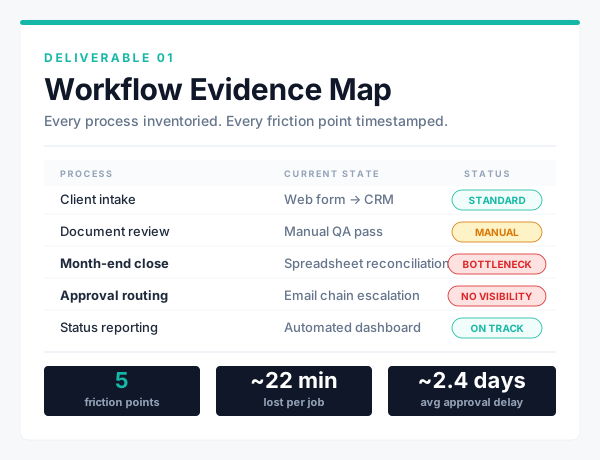
Workflow Evidence Map
See where handoff gaps and friction points cost your team time and visibility across every workflow.
See the evidence map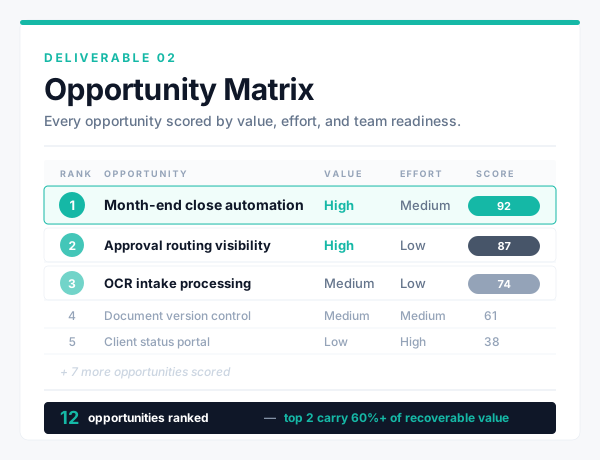
Opportunity Matrix
Every opportunity ranked by business value, effort, and readiness so you invest in the right places first.
View ranked opportunities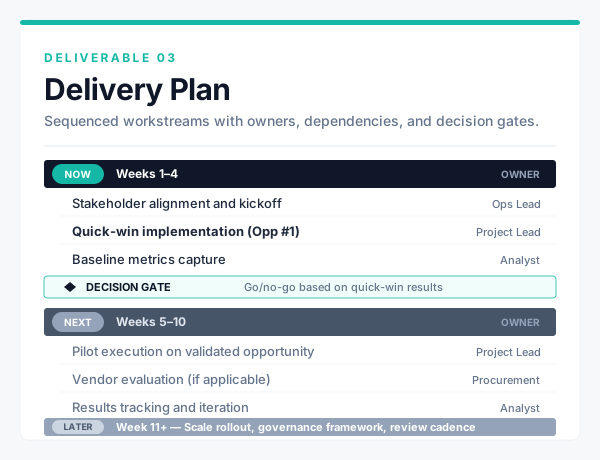
Delivery Plan
Now, Next, Later phasing with dependencies and success indicators. Actionable enough for any team to execute.
Preview the phased plan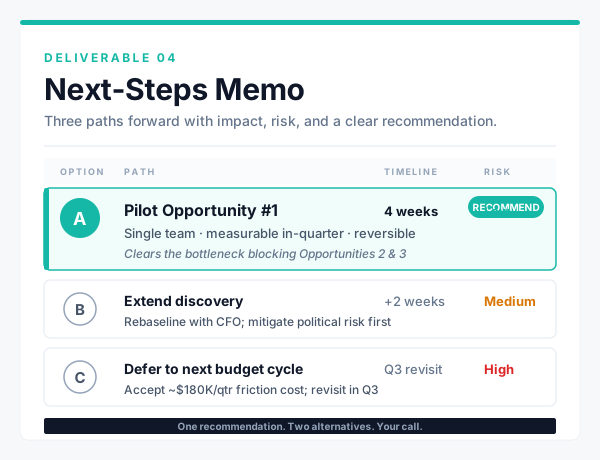
Next-Steps Memo
A decision memo with paths forward, trade-offs, and a recommended next action. You choose what happens next.
Read the decision memoThe plan is yours
Fixed fee. Four deliverables. Fully portable. Implement it yourself, bring us in for guidance, or hand it to any partner. No lock-in, no follow-up required.
Frequently asked questions
+ How long does a Leverage Audit take?
From kickoff to plan delivery, the engagement typically takes about two weeks. The exact timeline depends on scope and your team's availability. We confirm the schedule in the statement of work before anything starts.
+ What if we can't implement the plan right away?
The plan is fully portable. Every finding, recommendation, and next step is documented so you can return to it whenever you're ready. The deliverables are designed to stay useful whether you act immediately or come back months later.
+ How is this different from standard consulting?
The audit is outcome-focused, not hours-focused. We deliver a fixed scope of evidence, findings, and a phased implementation plan at a fixed price. You get no bills for overruns, no scope creep, and no retainer dependency. The deliverables stand on their own - you can move forward immediately or sit on the plan until you're ready to act.
+ What if we want help implementing the plan?
That's optional. At the end of the audit, we present options for next steps. If you want implementation guidance, we can discuss a second statement of work (SOW 2) that covers the work at a transparent price. But you're not obligated to work with us - the plan and all supporting evidence are fully yours to execute however you choose.
Stop missing the plan. Start with the Leverage Audit.
Map your workflows, rank every opportunity, and own the plan. Whether you work with us again or not.
Book a pre-discovery call →Or request a written proposal →
Questions? hello@marginshift.tech