Your firm bills for judgment.
Everything else is stealing billable hours.
Intake, conflicts, document assembly, review, and matter management consume the hours that should go to counsel. Margin Shift maps where that time leaks, then connects your systems so attorneys reference prior work instantly and spend their attention on the judgment clients retain them for.
Where the hours leak
A practice is a data-transformation business. The judgment and the accountability are the product. The handling around it is cost.
Intake and conflicts
New matters move through manual intake and conflict checks that depend on someone remembering to run them and re-keying the same client data across systems.
Document assembly
Attorneys and staff rebuild documents that already exist somewhere in the firm, because prior work is hard to find and harder to trust.
Review and reference
Contract review, citation checks, and precedent research run line by line under time pressure, which is where errors and missed references hide.
Matter management and billing
Matter status lives in email and memory. Time capture lags the work, and billing reconstructs what happened after the fact.
What changes when the systems connect
Illustrative. Every engagement surfaces different findings.
Situation
A practice runs matters across several practice areas. Intake and conflicts are manual. Document assembly starts from scratch. Review and citation checks happen under deadline. Matter status lives in email.
What we map in the audit
Where attorney time leaks: repeated intake and conflict entry, documents rebuilt from scratch, references checked by hand, and matter status no one can see.
What we build in the integration
One interoperable layer across the document management system, practice management, and email. Intake and conflicts run automatically, assembly pulls from prior work, references surface for the attorney to examine, and matter status stays current.
What changes
Prior work is referenced instantly, the work product is more defensible, and leadership sees the practice in real time.
What the audit delivers
Four standalone documents you own. They map where expert value is buried and design the path to interoperability. The audit is its own engagement, separate from the build.
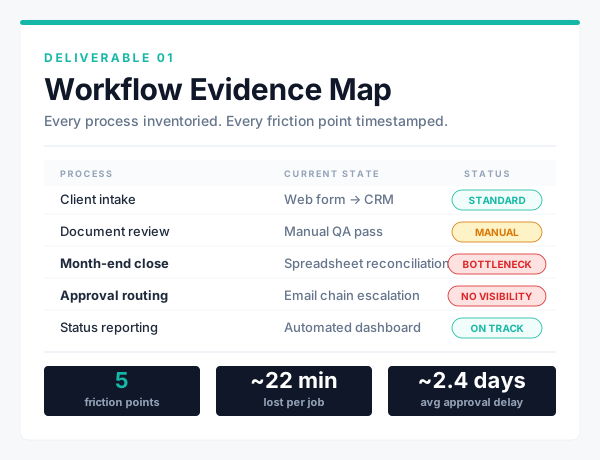
Workflow Evidence Map
Where the work moves and where it stalls, documented from structured discovery, so expert time leaks become visible.
See the evidence map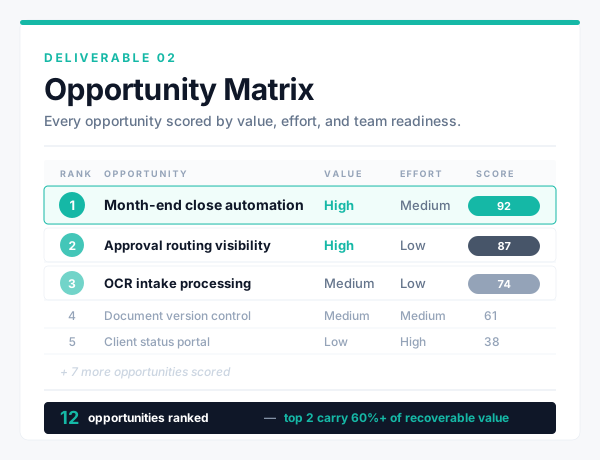
Opportunity Matrix
Every opportunity ranked by business value, effort, risk, and data readiness. Prioritized, not just listed.
View ranked opportunities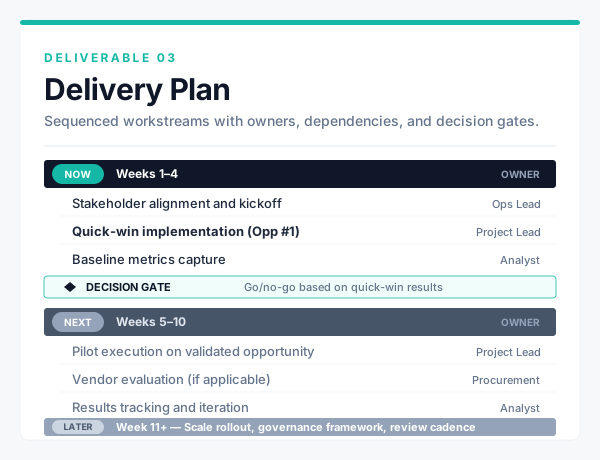
Integration Blueprint
The target-state systems architecture and the phased path to interoperability, with dependencies and success indicators. Specific enough to build from, whether we build it or your team does.
Preview the blueprint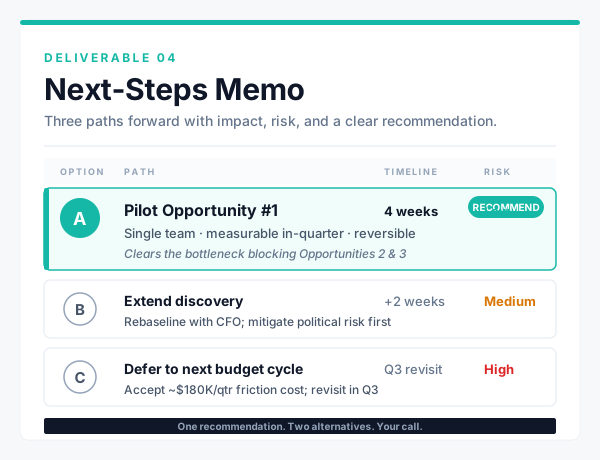
Next-Steps Memo
A decision memo with a recommended path and the trade-offs of each option. You choose what happens next.
Read the decision memoDefensibility is the deliverable.
Much of legal work is liability transfer. Speed of cross-checking and depth of referencing are what make a position defensible. Automation references the firm's own prior work, checks citations faster than a manual pass, and documents the basis for each decision. The attorney's judgment stays central. The work around it gets more thorough.
Frequently asked questions
Common questions from law firms about the audit and the build.
How do you protect confidentiality?
Confidentiality is the baseline. The audit maps workflows without needing access to privileged matter content, and engagements are covered by an NDA. The Integration Build is a separate engagement, scoped with your team and run on the systems you own.
Can we run the plan without hiring you for the build?
Yes. The audit and the build are separate engagements. The deliverables are portable, so you can build with your own team, another partner, or us.
How long does the audit take?
Typically about two weeks from kickoff to delivery, confirmed in the statement of work before work starts.
See where your attorneys' hours are going.
Start with a pre-discovery call. No pitch for software, because we do not sell any.
Book a pre-discovery call →Or request a written proposal →
Questions? hello@marginshift.tech